
Rooted in Wonder: Why We Don’t Always Give Children the Answers
- Carmina Harris
- 3 days ago
- 4 min read

As adults, it can be tempting to jump in with answers when a child asks a question. After all, we want to help. But at Olive Children, we believe some of the most meaningful learning happens when children are given the time and space to wonder, explore, and discover for themselves.
If you’ve spent time with a toddler or young preschooler, you’ve likely heard their favorite question: “Why?” Why is the sky blue? Why do birds fly? Why do I have to wear shoes? Why is the moon out during the day? Their endless stream of questions isn’t meant to challenge us—it is evidence of a mind actively trying to understand the world. Young children are naturally curious researchers. Every “why” is an invitation to learn, investigate, and make sense of their experiences.
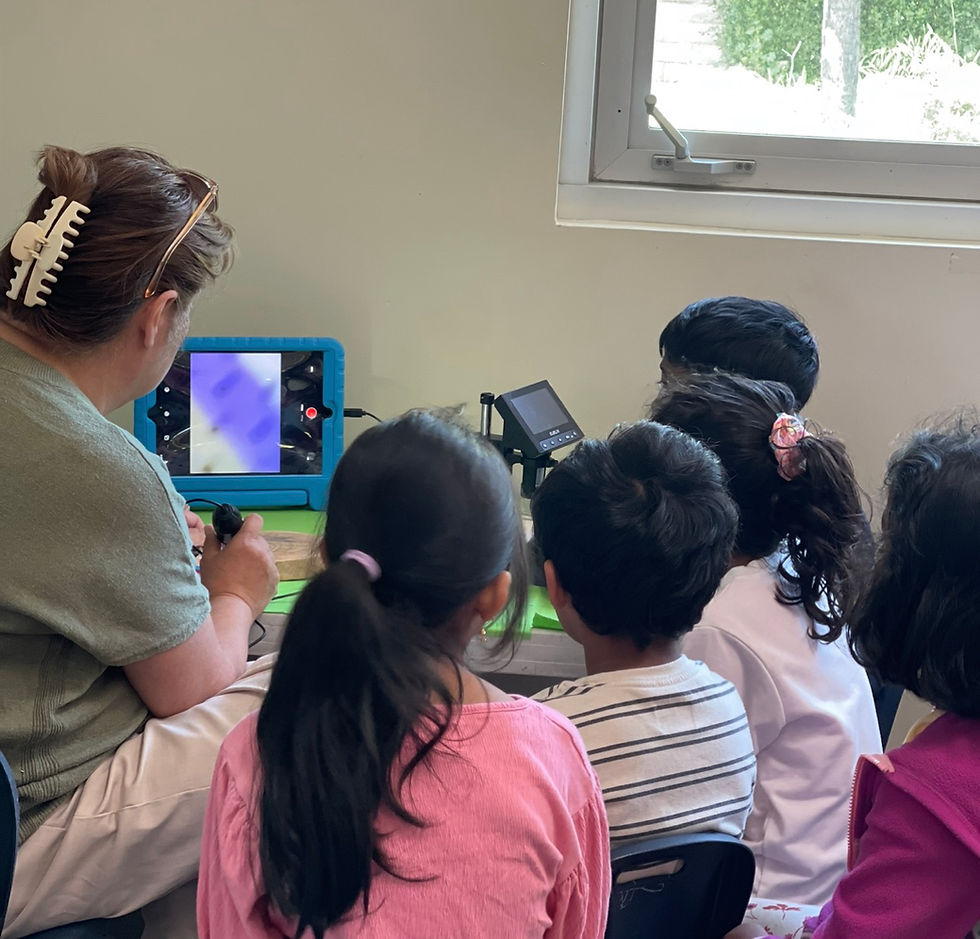
Imagine a child asking, “Why does this leaf have holes in it?” Instead of immediately explaining that an insect may have eaten it, we might respond with, “What do you think happened?” or “How could we find out?” These simple questions invite children to become researchers rather than passive recipients of information.
When children are encouraged to investigate their own questions, they develop important lifelong skills:
Critical thinking
Problem-solving
Observation and inquiry
Persistence
Confidence in their own ideas
In a world where answers are available with a quick search, the ability to ask thoughtful questions may be even more valuable than knowing the answer itself. Curiosity fuels learning. When children are given opportunities to think deeply, test ideas, and reflect on what they discover, they become active participants in their education.
This approach is inspired by the Reggio Emilia philosophy, which views children as capable, competent, and full of potential. We see children as scientists, artists, engineers, and storytellers who learn best when they are engaged in meaningful exploration.
You may hear teachers respond to questions with phrases such as:
“What do you notice?”
“What do you think?”
“How could we test that idea?”
“Tell me more.”
These responses are not avoiding the question—they are honoring the child’s thinking process.
Of course, there are times when direct instruction is necessary. However, by resisting the urge to provide immediate answers, we create opportunities for children to develop confidence in their own ability to think, wonder, and learn.
The next time your child asks “Why?” for the tenth time in a row, consider it a sign that learning is happening. Rather than rushing to provide an answer, try responding with a question of your own. You may be amazed by the theories, observations, and ideas your child shares. Those conversations are where some of the richest learning begins.
Because at Olive Children, we believe learning doesn’t begin with answers—it begins with wonder.
Rooted in Wonder is our ongoing blog series celebrating the curiosity, creativity, and capabilities of young children.
—————-————-
扎根于好奇:为什么我们不总是直接告诉孩子答案

作为成年人,当孩子提出问题时,我们总是很想立刻给出答案。毕竟,我们希望帮助他们。然而,在 Olive Children,我们相信,最有意义的学习往往发生在孩子拥有时间和空间去思考、探索和亲自发现答案的时候。
如果您曾经和幼儿或学龄前儿童相处过,您一定听过他们最喜欢说的话:“为什么?” 为什么天空是蓝色的?为什么鸟儿会飞?为什么我必须穿鞋?为什么白天也能看到月亮?他们接连不断的问题并不是为了挑战我们,而是在证明他们的大脑正在积极地理解这个世界。幼儿天生就是好奇的探索者。每一个“为什么”都是一次学习、调查和理解周围事物的机会。
想象一下,一个孩子问:“为什么这片叶子上有洞?” 与其立刻告诉他可能是昆虫啃食造成的,我们更可能回应:“你觉得发生了什么?”或“我们可以怎样找到答案呢?”这些简单的问题邀请孩子成为研究者,而不仅仅是被动接受信息的人。
当孩子被鼓励去探索自己的问题时,他们会发展出许多终身受益的重要能力:
批判性思维
解决问题的能力
观察与探究能力
坚持与耐心
对自己想法的信心
在这个只需轻轻一点就能获得答案的时代,提出有意义的问题或许比知道答案本身更重要。好奇心驱动学习。当孩子有机会深入思考、验证自己的想法并反思自己的发现时,他们便成为了学习过程中的积极参与者。
这种教育方式源于瑞吉欧教育理念(Reggio Emilia),它认为孩子是有能力、有潜力并充满智慧的。我们将孩子视为科学家、艺术家、工程师和讲故事的人,他们通过有意义的探索获得最好的学习体验。
您可能会听到老师这样回应孩子的问题:
“你观察到了什么?”
“你觉得呢?”
“我们怎样验证这个想法呢?”
“再告诉我一些吧。”
这些回应并不是在回避问题,而是在尊重孩子思考和探索的过程。
当然,有些时候直接教学是必要的。然而,当我们克制自己立刻给出答案的冲动时,我们就在为孩子创造机会,让他们建立对自己思考、探索和学习能力的信心。
下次当您的孩子连续第十次问“为什么”的时候,请把它看作学习正在发生的信号。与其急着给出答案,不如试着用一个问题来回应他们。您可能会惊讶于孩子提出的理论、观察和想法。这些对话往往正是最丰富、最有意义的学习开始的地方。
因为在 Olive Children,我们相信,学习并非始于答案,而是始于好奇与探索。
“扎根于好奇(Rooted in Wonder)”是我们的持续博客系列,旨在庆祝孩子们的好奇心、创造力以及无限潜能。


Comments