
Rooted in Wonder: Why Curiosity Is at the Heart of Learning
- Carmina Harris
- Jun 5
- 4 min read

“I wonder…”
These two simple words are often the beginning of a child’s greatest discoveries.
At our schools, we believe children are naturally curious. They wonder why worms come out after the rain, how shadows change throughout the day, what happens when colors mix, and why some objects float while others sink. Their questions are not distractions from learning—they are the starting point of learning.
This belief inspired our theme and philosophy: Rooted in Wonder.
Being rooted in wonder means creating an environment where curiosity is valued, questions are celebrated, and children are encouraged to explore the world around them. Rather than focusing solely on finding the “right answer,” we focus on helping children become observers, thinkers, problem-solvers, and lifelong learners.
When children are given time to investigate, experiment, and share their ideas, they develop skills that extend far beyond the classroom:
Critical thinking
Creativity
Communication
Collaboration
Confidence
Resilience
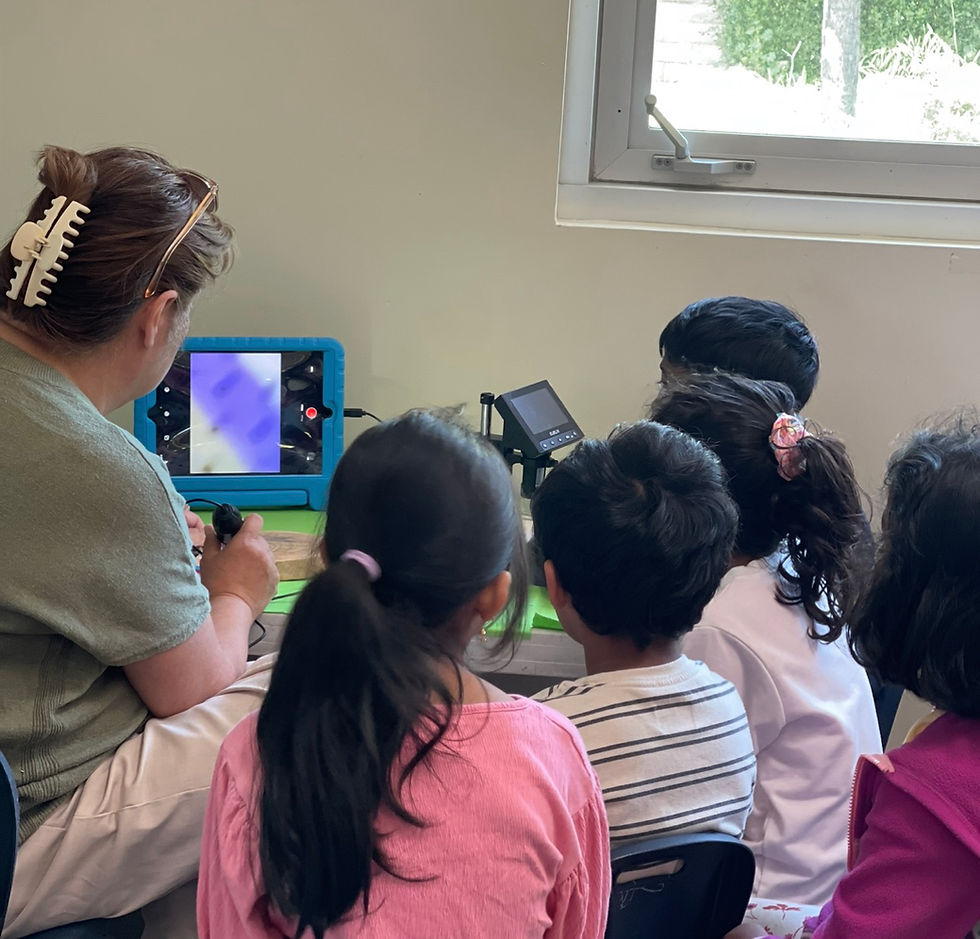
You may see children examining leaves in the garden, testing how ramps change the speed of a toy car, creating inventions from recycled materials, or asking questions during a science experiment. These moments may seem simple, but they are powerful opportunities for learning.
Wonder is not limited to science. It can be found in art, music, language, nature, engineering, and everyday experiences. A puddle becomes an opportunity to investigate reflections. A story sparks questions about different cultures and perspectives. A block structure becomes an engineering challenge.
As educators, our role is not to provide every answer. Instead, we listen carefully, observe closely, and create opportunities for children to explore their ideas. We become partners in discovery.
How Families Can Nurture Wonder at Home
Wonder doesn’t require expensive materials or elaborate activities. Sometimes it begins with simply slowing down and noticing.
This week, try asking your child:
What did you notice today?
What made you curious?
What do you wonder about?
How could we learn more about that?
You may be amazed by where the conversation leads.
Growing Together
As we begin this new chapter rooted in wonder, we look forward to exploring, questioning, creating, and discovering alongside your children. Every question, every observation, and every moment of curiosity helps build the foundation for a lifelong love of learning.
Because when children are rooted in wonder, learning has no limits.
-———
扎根于好奇:为什么好奇心是学习的核心
“我很好奇……”
这简单的几个字,常常是孩子最伟大发现的开始。
在我们的学校里,我们相信孩子天生就充满好奇心。他们会好奇为什么下雨后蚯蚓会爬出来,为什么影子会随着时间变化,颜色混合后会发生什么,以及为什么有些东西会浮起来而有些会沉下去。他们提出的问题并不是学习的干扰,而是学习的起点。
正是这种信念启发了我们的主题和教育理念:“扎根于好奇”(Rooted in Wonder)。
“扎根于好奇”意味着创造一个重视好奇心、鼓励提问、支持孩子探索周围世界的学习环境。与其只关注寻找“正确答案”,我们更关注培养孩子成为观察者、思考者、问题解决者和终身学习者。
当孩子们拥有时间去观察、探索、实验并分享自己的想法时,他们能够发展出超越课堂的能力:
批判性思维
创造力
沟通能力
合作能力
自信心
坚持与韧性
您可能会看到孩子们在花园里观察树叶,在斜坡实验中探索小汽车速度的变化,用回收材料进行创造发明,或是在科学实验中提出各种问题。这些看似简单的时刻,其实蕴含着丰富而深刻的学习机会。
好奇心不仅存在于科学活动中,它也存在于艺术、音乐、语言、自然探索、工程设计以及日常生活的点滴之中。一个水坑可以成为研究倒影的机会;一本故事书可以激发对不同文化和观点的思考;一座积木建筑则可能成为一次工程设计挑战。
作为教育者,我们的职责并不是为孩子提供所有答案。相反,我们认真倾听、细心观察,并创造机会让孩子探索自己的想法。我们与孩子一起学习、一起发现,成为他们探索旅程中的伙伴。
家庭如何在家中培养孩子的好奇心
培养好奇心并不需要昂贵的材料或复杂的活动。有时候,它只需要我们放慢脚步,认真观察身边的事物。
本周,您可以试着问孩子:
今天你观察到了什么?
什么事情让你感到好奇?
你在想些什么问题?
我们可以怎样进一步了解它呢?
您可能会惊喜地发现,孩子的想法远比我们想象的更加丰富。
一起成长
在这个“扎根于好奇”的新旅程中,我们期待与孩子们一起探索、提问、创造和发现。每一个问题、每一次观察、每一份好奇,都是培养终身学习热爱的种子。
因为当孩子扎根于好奇时,学习将拥有无限可能。



Comments